Field Testing
Proving RoboBall in the Field
A lot of my work focused on framing RoboBall as a robust explorer in harsh, unstructured environments. I led field-testing for this project to demonstrate that the robot could do what we designed it for.
I performed risk assessment per DOD and TAMU RELLIS standards, ensuring safety while upholding the team’s testing goals and experimental integrity.
I planned and executed over 250 hours of field testing to test things like power efficiency in analog environment, drivetrain durability, and mission validation. I analyzed data from these practical field experiments to evaluate and redesign RoboBall where needed.
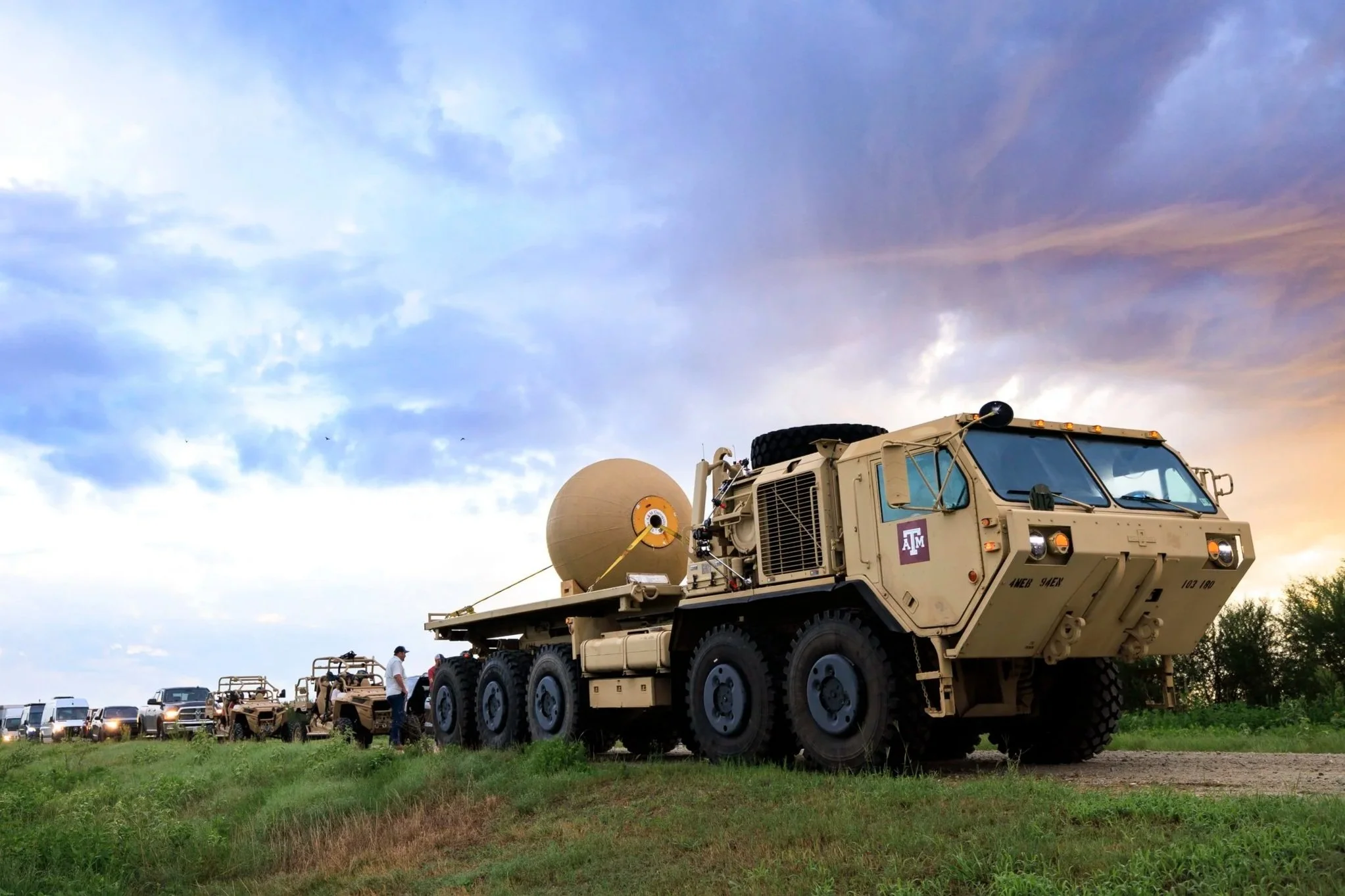
One of the major test campaigns I organized involved RoboBall III in an analog crater, which was a former gravel quarry. We simulated a crater descent and ballistic sample return mission, showing that RoboBall III was a viable member of a crater descent robot team. This test campaign involved thorough communication with range control and safety officers, risk assessments and briefings to prevent injury and preserve test integrity, and extensive preparation to ensure field-readiness.
I evaluated the energetics and qualitative mobility associated with this descent, showing that RoboBall could survive a highly chaotic, fast, uncontrolled descent and use as little as 1% of its battery without accounting for any regeneration.
I also demonstrated that we could deliver a payload, which in our case was a sample return rocket with a 3.5g sample, to the bottom of the crater effectively.
Analyzing data and results from the first few tests with the Gen 1 RoboBall III, I led the redesign and development of Gen 2 with the goal of increasing off-road mobility.
To do so, I increased torque by 250%, allowing us to perform more dynamic movements and achieve greater slope climbing ability.
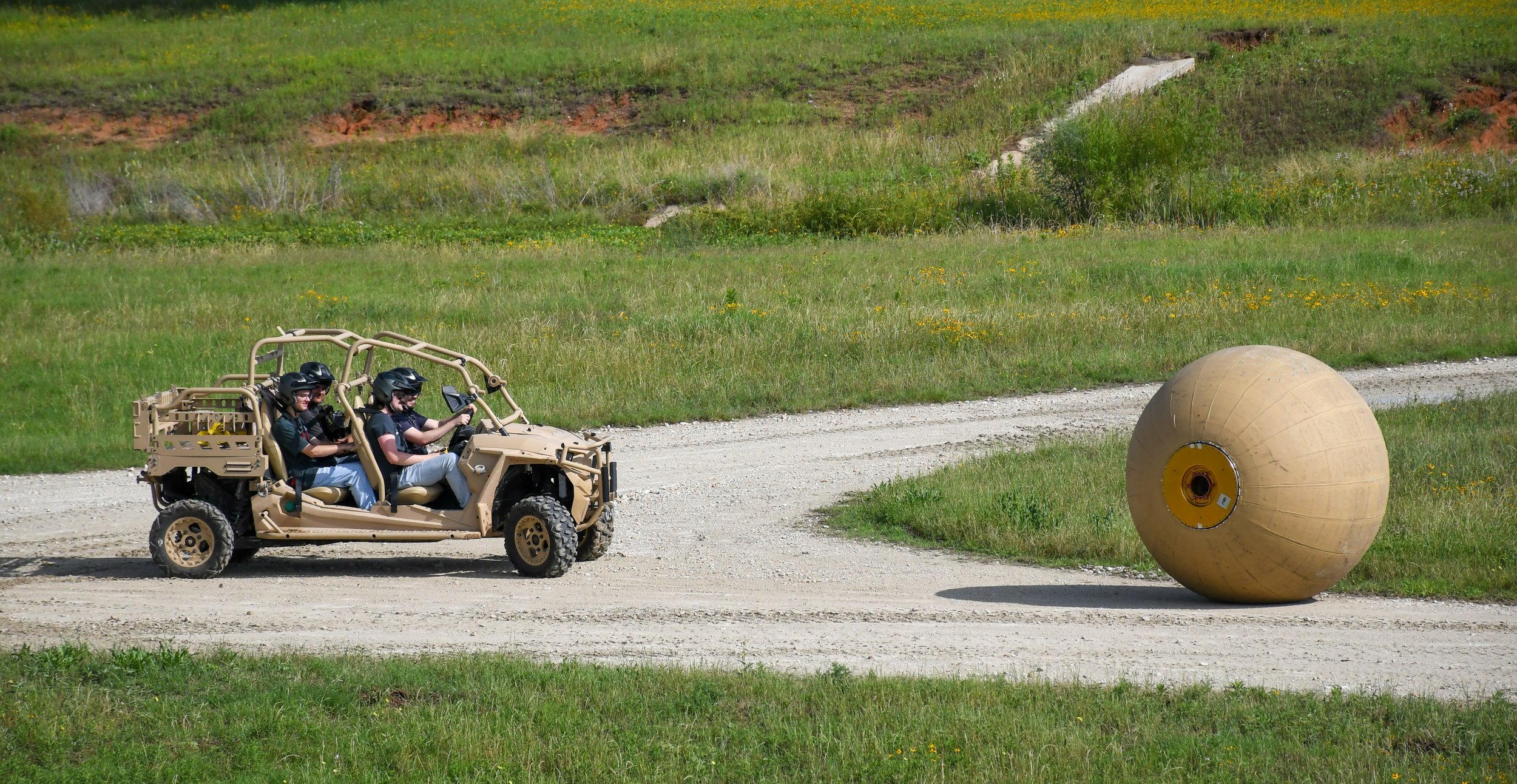
I tested both these robots in the same environment that previously incapacitated Gen 1, and showed that Gen 2 was more capable at self-recovery.
I also coordinated testing with the Texas A&M University Bush Combat Development Complex to perform testing on their Innovation Proving Grounds (IPG) Mobility Challenge Course (MCC), a large outdoor challenge course for testing robot mobility.
Here, I field-tested both Gen 1 and Gen 2, again comparing their mobility across a range of obstacles, validating my design changes in a practical environment.
Gen 2 IPG Test