Mission Payloads
Enabling RoboBall’s Missions
RoboBall III’s most mission-defining capability is it’s 6” diameter hollow driveshaft. This driveshaft can hold a broad variety of payloads to enable RoboBall as a scientific explorer. I built two archetypes of payloads: sample collection and reconnaissance.
Sample Collection
RoboBall is designed to quickly and robustly descend deep into lunar craters where existing vehicles may struggle.
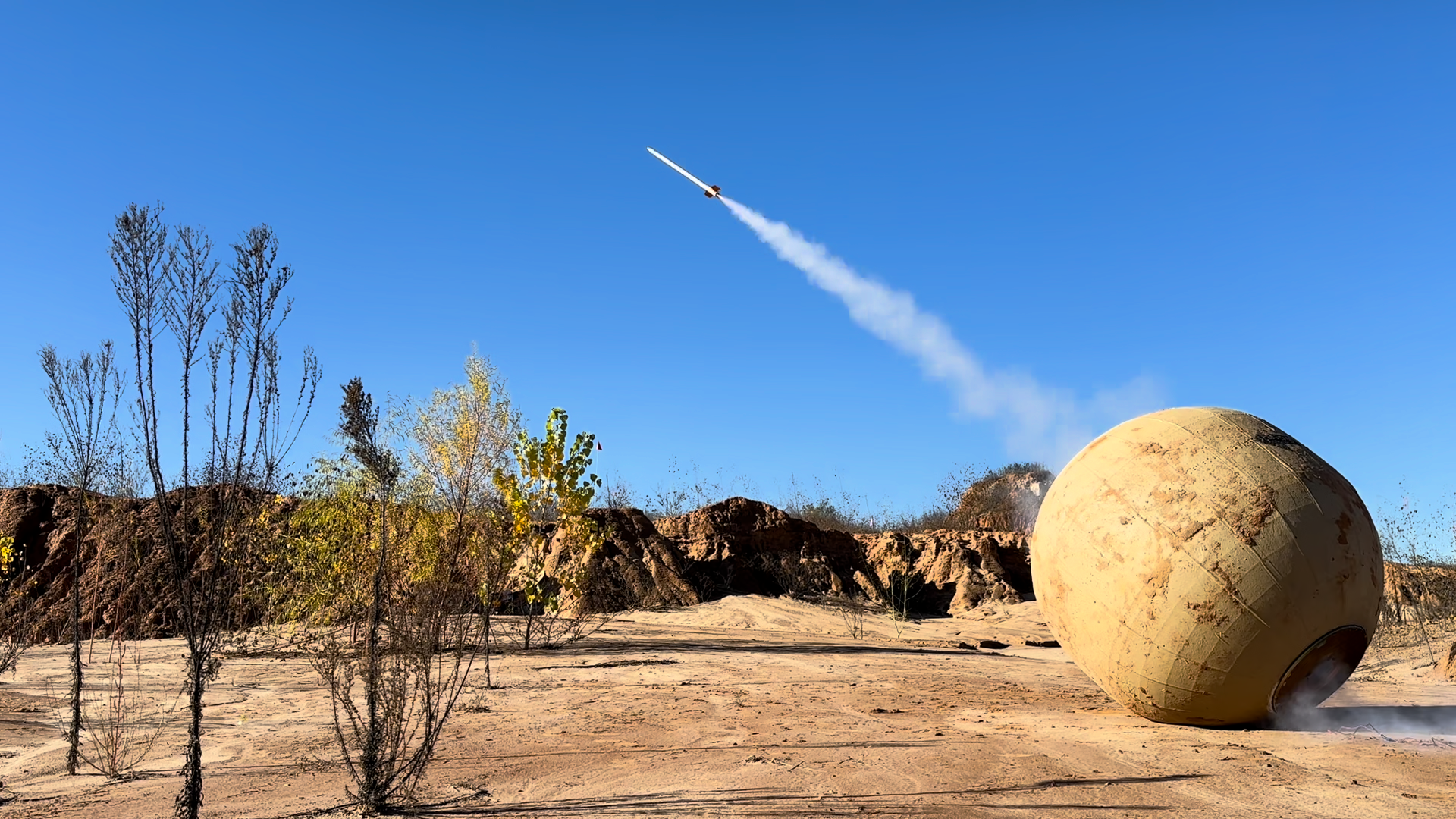
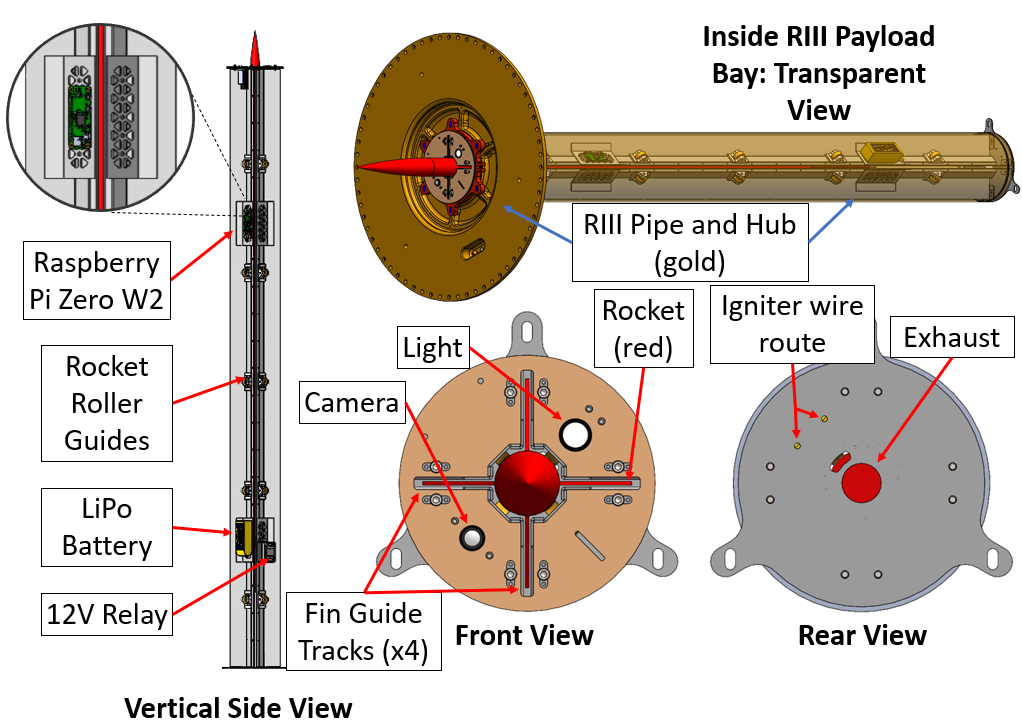
The first payload I built, the Sample Acquisition and Recovery Rocket Module (SARRM), imagines a mission where a RoboBall enters a crater’s depths with a small rocket in its payload bay, which it uses to collect and eject a sample outside the crater to an astronaut team. The modular payload featured intelligence with which RoboBall could communicate and initiate a launch, infrastructure for motorized rollers to extend the rocket, and electronics to ignite the motor. A camera and light also could be used to locate/select samples.
In lunar gravity, a small rocket gets you pretty far. While I intentionally undersized the rocket we used in testing for safety, I calculated that a rocket with 41 N-s of impulse would get a ~5g sample up and out of the deepest parts of Shackleton crater, which is well within the realm of commercially available solid rocket motors.
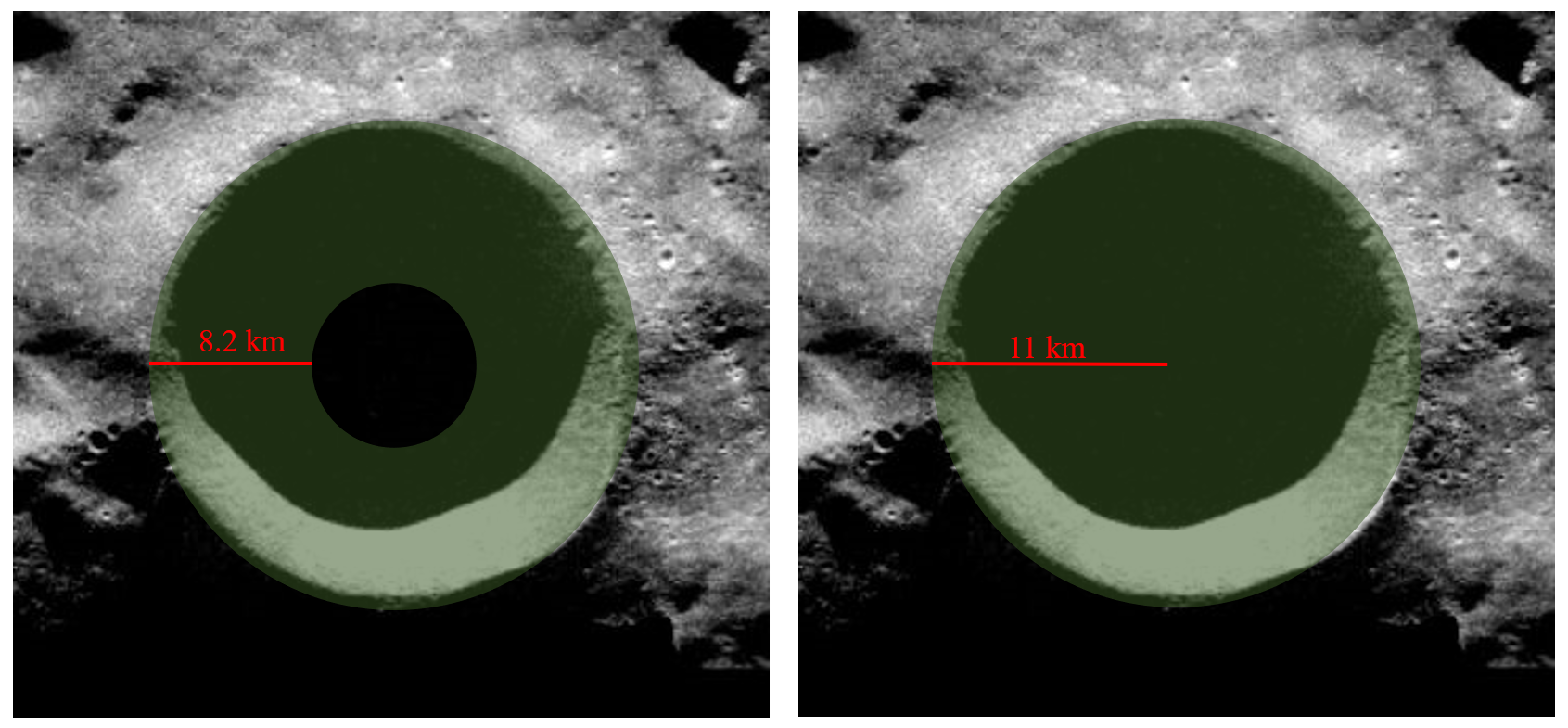
Viable expected SARRM Launch range with tested E16 rocket motor (33.7 N-s) (left) vs. F15 rocket motor (49.6 N-s) (right) in Shackleton crater.
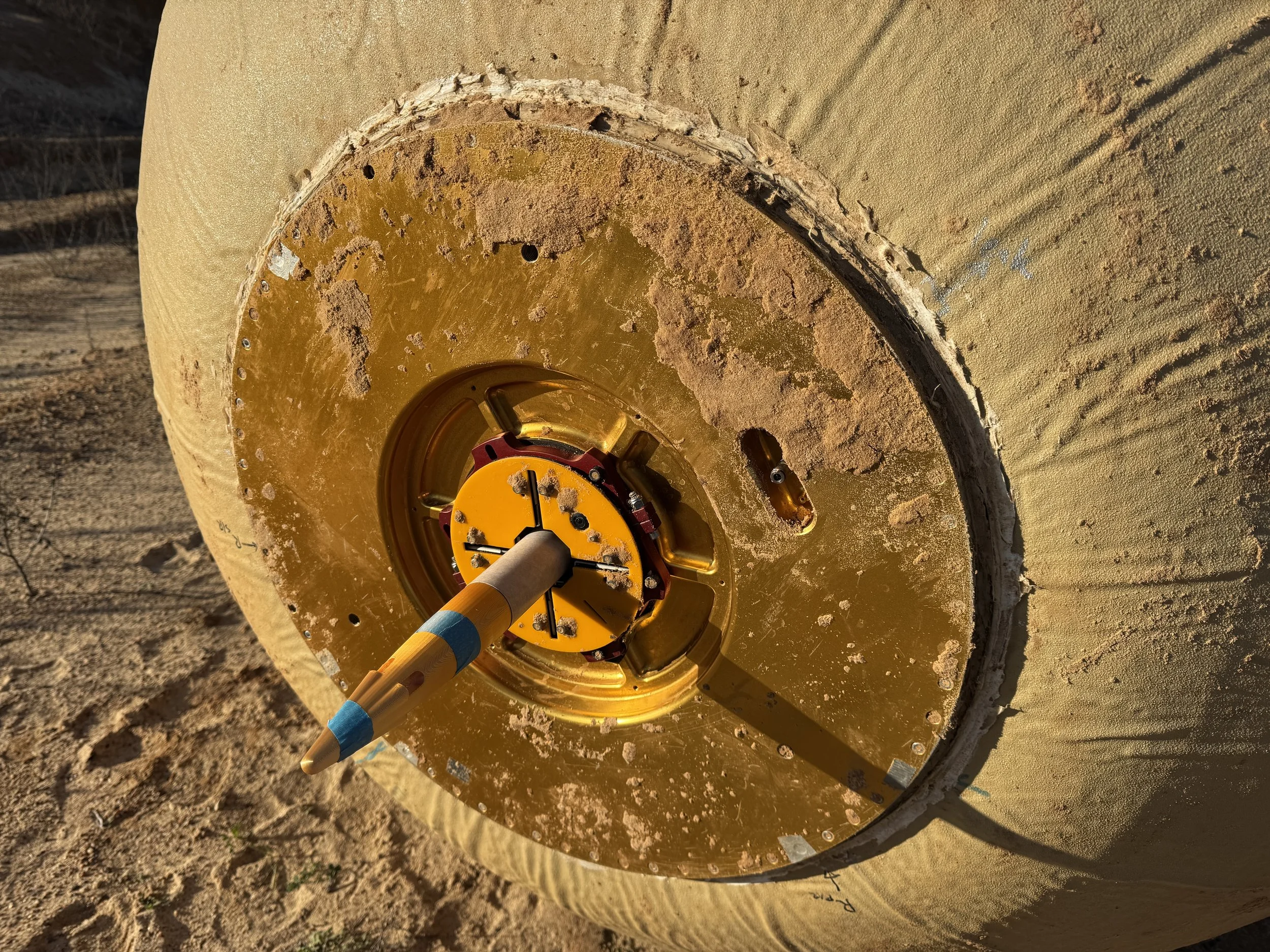
SARRM extended from RoboBall’s payload bay.
Reconnaissance
The second payload aimed to add modular deployables to RoboBall. These could be used as stationary science experiments (like Apollo’s ALSEP experiments) or for extending communcation.
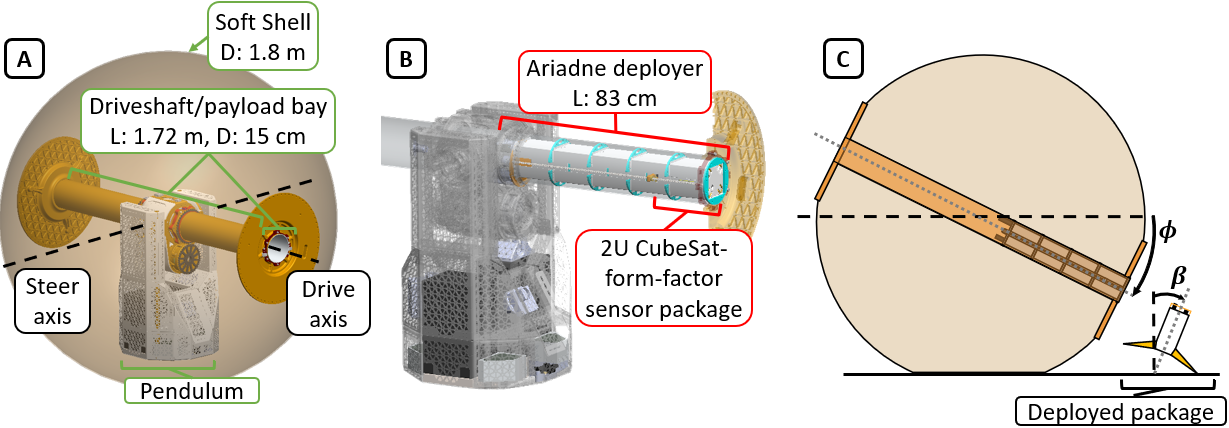
I built the Ariadne deployer, which deployed modular CubeSat-form-factor sensor packages. I managed requirements like volumetric constraints, mass budgets, retention during dynamic motion, deployment consistency, and practical use. As a TRL 4 prototype, we used Earth-relevant sensors and hardware rather than flight-qualified.
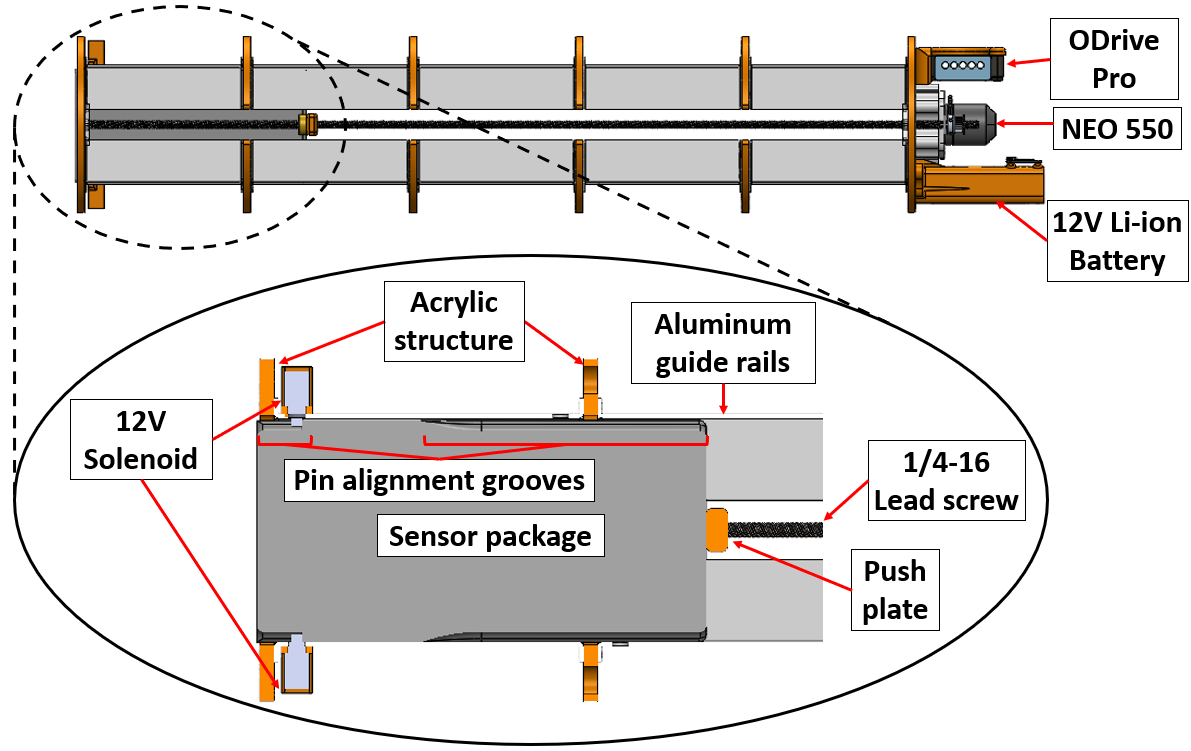
Ariadne Deployer Schematic
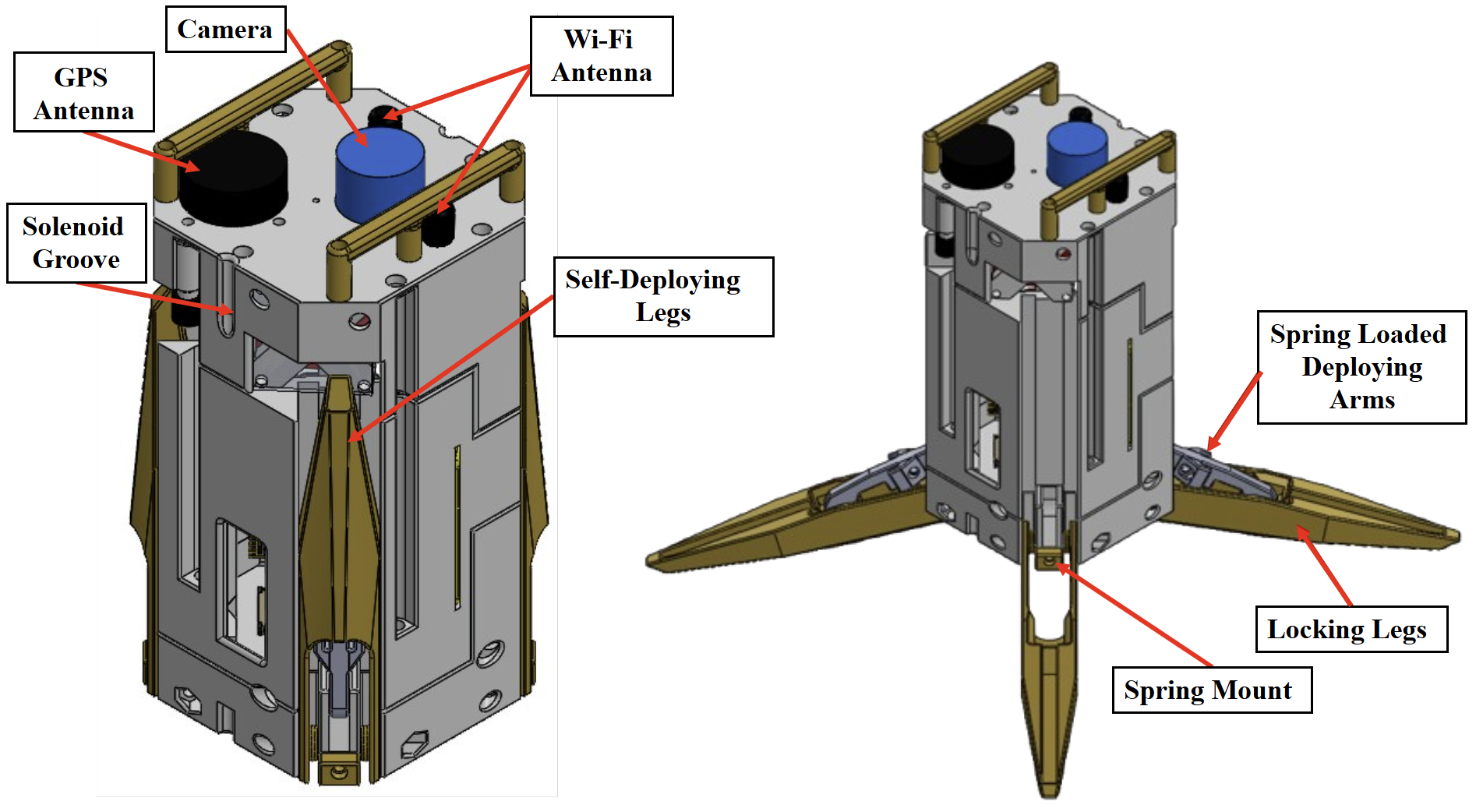
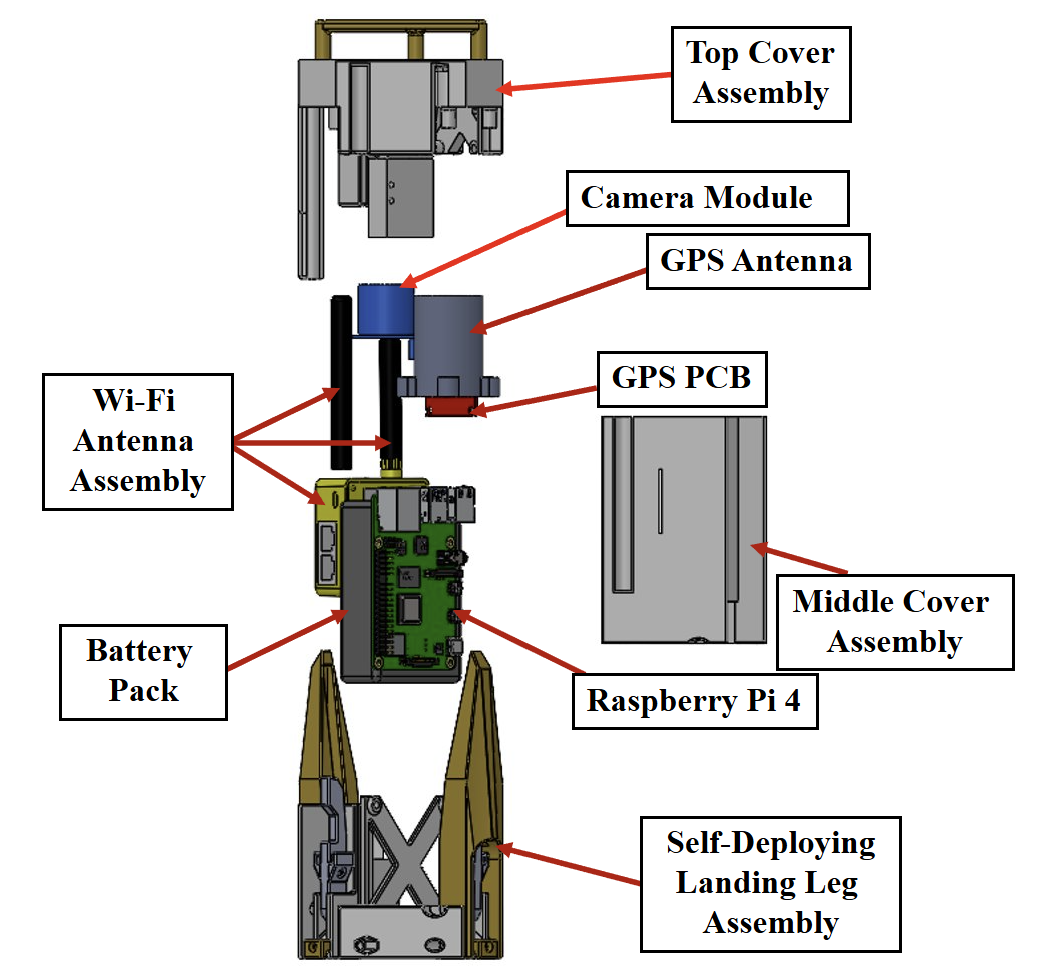
Sensor package schematics
I performed statistical tests to determine a minimum steering angle ϕ of 20 degrees required in the RoboBall to ensure consistent, successful deployment.
These sensor packages were also functionally overloaded, and could disable functions to increase battery life, from 13 hours fully utilized to up to 20 hours with extraneous functions disabled.
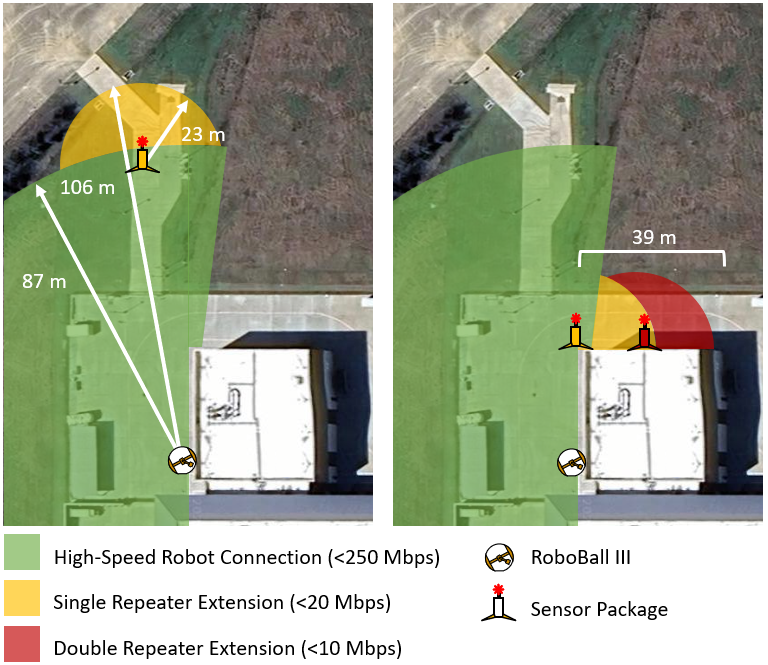
In a practical experiment, I demonstrated how the strategic deployment of these sensor packages could be used for extending communication range or enabling beyond-line-of-sight communication, which is useful for communication beyond high crater rims.